 CLEARMASTERS
gallon tankers
the same visit
note every time
waste carrier
call-outs
The basics
What is desludging?
Desludging. Not a pretty word, is it? That's probably why lots of people just call it emptying.
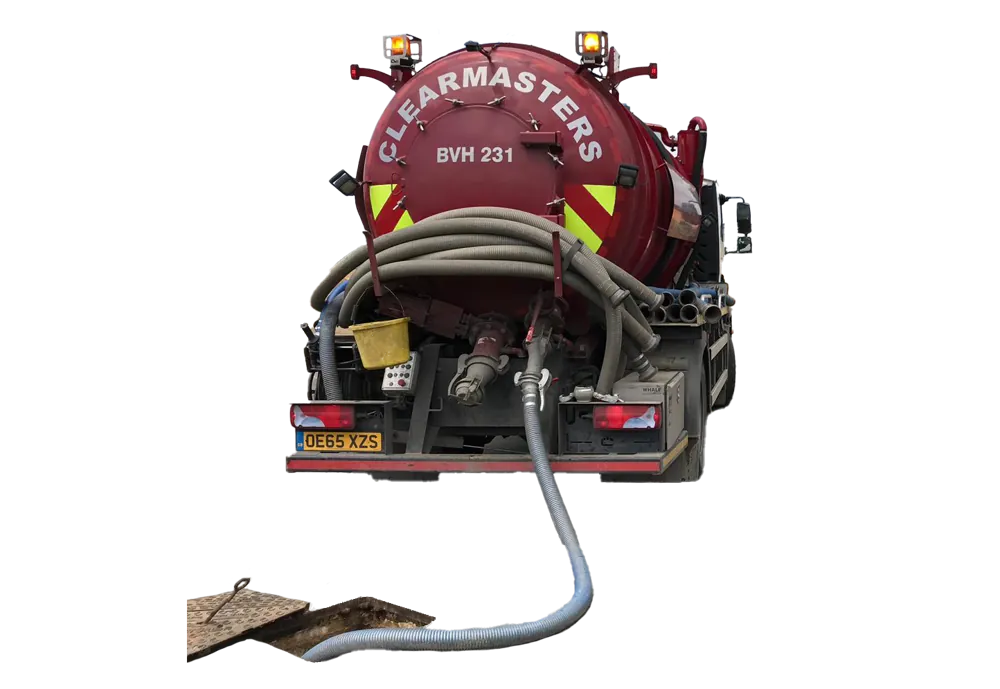
It means removing the settled solids from the bottom of your treatment plant and the fats, oils and grease from the top. Every plant is a little different, but we do it with a vacuum tanker: think of a giant Henry hoover on wheels.
Desludging is usually done alongside a yearly treatment plant service. We service all the main makes, including Klargester, Tricel and Graf.
We do this work across Surrey, West Sussex, East Sussex, Kent, Hampshire and London, with tankers and engineers in each area most days.
We take away everything your plant can't treat itself to a large sewage treatment works, the same place your waste would end up if you were on mains drainage. That gives your plant the best chance of carrying on treating its waste as it's designed to, and stops the build-up from blocking or breaking the system.
How it works
How does a sewage treatment plant work?
It starts the same way as a septic tank: pipework carries wastewater from your property into the plant through the inlet (1), into the primary settlement chamber (2), where solids sink, fats and grease float, and the liquid separates out.
The liquid then moves into the biozone (3) to be treated. Depending on the make and model, that's done by blowing air into the tank from an air blower (4), with a rotating disc or by passing the liquid through filters. Whichever it is, the idea is to grow bacteria that feed on the nasty stuff in the liquid.
Finally the treated liquid moves into the final settlement chamber (5), which settles out any remaining particles before the clean effluent leaves through the outlet (6) to a drainage field or a watercourse.
Some manufacturers claim the final effluent is clean enough to drink. We'll take their word for it, but we don't recommend trying.
- 1InletWastewater from the house flows in here.
- 2Primary settlement chamberSolids sink to the bottom as sludge and fats float as scum. This is mainly what we remove when we desludge.
- 3BiozoneAir is bubbled through the liquid so bacteria can feed on what’s left in it and clean it.
- 4Air blower and diffuserThe blower pumps air to the diffuser, which bubbles it through the biozone to keep the bacteria alive.
- 5Final settlement chamberAny remaining particles settle out before the water leaves.
- 6OutletClean effluent flows out to a drainage field or a watercourse.
Why it matters
Why does a treatment plant need desludging?
The bacteria in your plant can break down a lot, but not everything. Solids collect in the first chamber and sludge builds up in the others. If it isn't removed, it gets carried through the plant, the bacteria can't keep up, and poorly treated effluent ends up in your drainage field or the local stream.
That can damage the drainage field, harm the environment and, if your plant discharges to a watercourse, put you in breach of the rules.
Most domestic treatment plants need desludging about once a year, but some models need it more often. Check your manual, or tell us the make and model and we'll tell you.
Signs your plant needs attention
- Bad smells around the plant
- Cloudy or smelly water coming out of the outlet
- Drains running slowly or backing up
- An alarm on the control panel or air blower
- Sludge or solids visible near the outlet
Maintenance
Do all these moving parts need looking after?
Absolutely. A well-maintained plant works properly and costs far less in the long run.
A yearly service
Treatment plants have air blowers, pumps, diffusers and filters that wear out. A service at least once a year keeps them running, and is usually done at the same time as desludging.
Desludging
Removing the sludge before it builds up too far, as often as your plant's manufacturer recommends.
Refilling after emptying
Many plants need refilling with water straight after they're emptied, so the tank doesn't lift or distort in wet ground. We follow the instructions for your model.
Checking the effluent
A quick look at what's coming out of the plant tells us a lot about how well it's working.
Look after your plant
Sewage treatment plant do's and don'ts
Do
- Use cleaning products little and often
- Think before anything goes down the sink, toilet or drains
- Have your plant desludged when it's due
- Leave the plant switched on, even when you're away
- Use liquid rather than powder detergents in the washing machine and dishwasher
- Only flush toilet paper
Don't
- Flush wipes, sanitary products or cotton buds
- Pour fat, grease or cooking oil down the sink
- Put chemicals or garden products, like weedkiller, down the drains
- Let rainwater or large volumes of water into the plant
- Tip paint, thinners or brush cleaner down the sink
- Let anyone unqualified tamper with the system
The list could go on. If you're ever unsure whether something is OK, just give us a call and ask first.
On the day
What happens when we desludge your plant
We check your model
Every plant is different. Tell us the make and model when you book and we'll follow the manufacturer's desludging instructions.
We desludge the chambers
We remove the sludge, scum and solids that need to come out, and leave behind what the plant needs to keep working.
We refill and restart
Where your plant needs it, we refill it with water and make sure it's running again before we leave.
You get a waste transfer note
Proof your waste was removed by a registered carrier and disposed of properly. Keep it with your property records.
Why Clearmasters
Why choose us to desludge your treatment plant?
Treatment plants are more complicated than septic tanks, so it pays to use people who know them. Our team works on most of the common makes and can service your plant on the same visit.
Ask us a questionAlways on hand
Routine visits booked at a time that suits you, and 24/7 call-outs when something goes wrong.
Advice from people who know
Our office team can talk you through your system, your options and the rules, or simply get you booked in.
Trained, friendly engineers
Our engineers work with minimal disruption and are happy to answer any questions while they're with you.
Desludge and service together
We can desludge and service your plant in one visit, saving you time and a second call-out.
What our customers say
Checkatrade
From 134 reviews · Read them
From 63 reviews · Read them
Scores as of September 2026
Questions answered
Treatment plant FAQs
How often should a sewage treatment plant be desludged?
Most domestic plants need desludging about once a year, but it depends on the model, the size of the plant and how many people use it. The rules say the sludge must be removed before it goes beyond the plant's capacity, and the manufacturer's instructions must be followed. Tell us the make and model and we'll tell you how often yours needs it.
What happens if a treatment plant isn't desludged?
Sludge builds up and gets carried through the plant, so it can't treat the wastewater properly. That means poorer quality effluent, a higher risk of damaging your drainage field and, if you discharge to a stream or ditch, a risk of pollution. Regular desludging avoids breakdowns and emergency call-outs.
Do I need to switch the plant off while you desludge it?
Usually not. Our engineers will isolate anything that needs it and make sure the plant is running again before they leave.
How do I know when my plant needs desludging?
Signs include drains running slowly, bad smells around the plant, cloudy water at the outlet or solids near the outlet pipe. We can check the sludge levels and tell you when it's due.
Will desludging improve my treatment plant's performance?
Yes. Removing the excess sludge helps the plant run as designed, improves the quality of the effluent and reduces the strain on its mechanical parts. It's one of the simplest ways to make your plant last longer.
Do I need to do anything before you arrive?
Not usually. As long as we can get to the plant safely, we'll handle the rest. If the lids are heavy or overgrown, or the access is tight, let us know when you book and we'll bring the right kit.
Got a different question? Call 03333 233566 or send us a message. You can also read the rules on GOV.UK.
Related services
Fully accredited & compliant
We're independently vetted and certified so you can trust who you're letting onto your site.
SafeContractor
Health & safety pre-qualification accreditation, verifying our processes meet recognised safety standards.
RISQS
Railway Industry Supplier Qualification Scheme — approved to work safely within the rail industry supply chain.
Achilles UVDB
Utilities Vetting Database membership, confirming we meet the utilities sector's supply chain standards.
Trading Standards Approved
Vetted and approved under the local authority's trusted trader scheme for honesty and fair dealing.
NADC Member
Members of the National Association of Drainage Contractors, the UK trade body for the drainage industry.
Registered Waste Carrier
Registered with the Environment Agency, so your waste is handled and disposed of fully within the law.