 CLEARMASTERS
gallon tankers
on the same visit
note every time
waste carrier
call-outs
The basics
What is a septic tank?
If your property isn't connected to the mains sewer, its wastewater goes into a private system instead. Whether you own, rent or are buying a home with off-mains drainage, it's worth knowing what you have and how to look after it.
If the tank or the ground around it isn’t behaving as it should, a septic tank survey will find out why. Slow drainage often points to a failing drainage field or soakaway.
We do this work across Surrey, West Sussex, East Sussex, Kent, Hampshire and London, with tankers and engineers in each area most days.
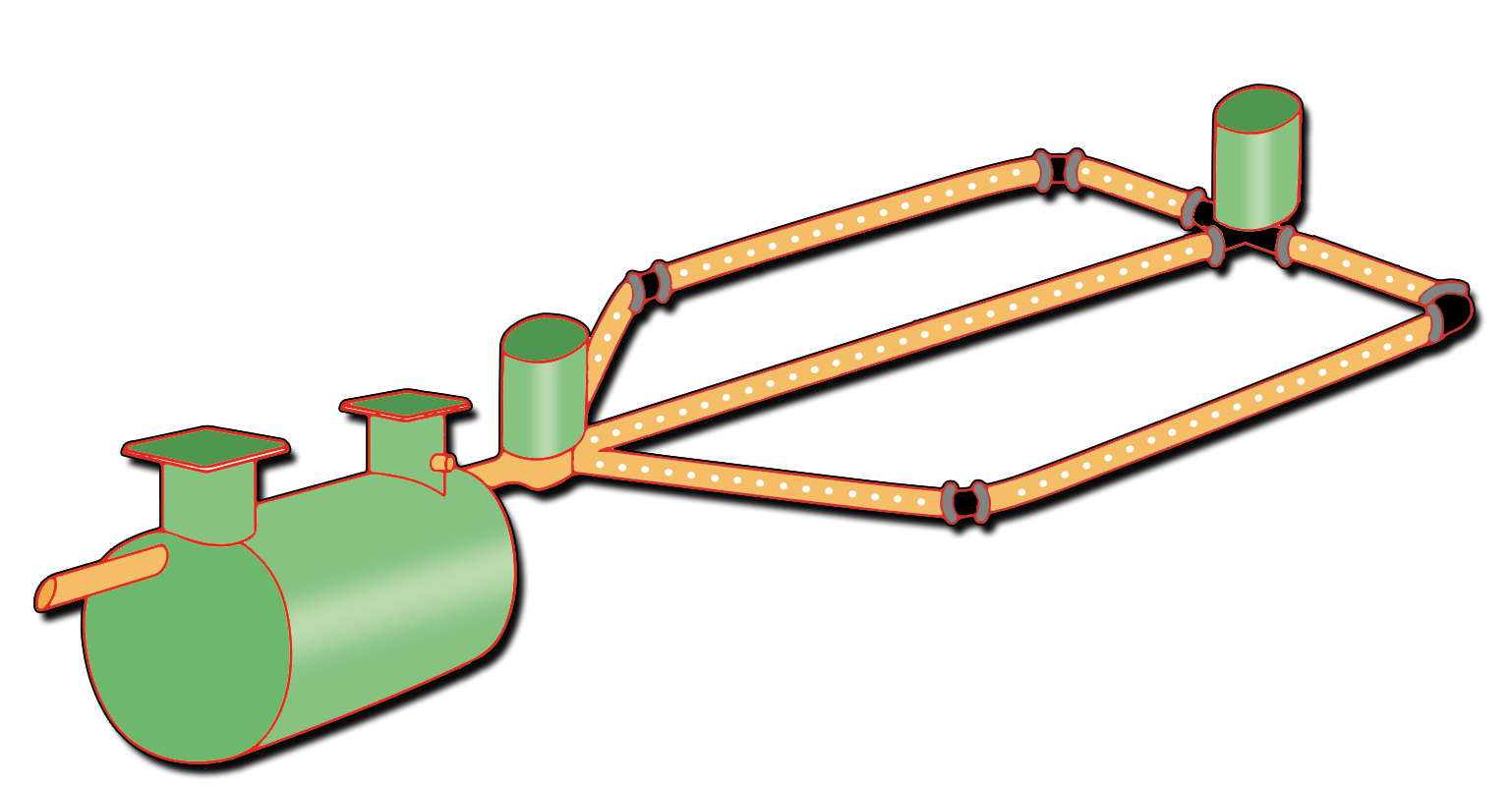
Septic tanks come in different shapes and sizes, but they all work the same way. Wastewater flows from the house into the tank through the inlet. Inside the tank, solids sink to the bottom as sludge, fats and grease float to the top, and the liquid in the middle leaves through the outlet into a distribution chamber. From there it's spread through the drainage field, a network of perforated pipes underground, where it slowly soaks away and is cleaned by bacteria in the soil.
Looked after properly, a septic tank can work for decades. Neglected, it can pollute the ground around it and lead to an expensive repair.
Jargon buster
Just a load of jargon?
We know. Here's what the words mean, in plain English. The numbers match the diagram above.
 1
1Inlet
Where waste enters the tank. Everything from your sinks, toilets, bath and washing machine flows through pipework from the house to here.
 2
2Tank
The main chamber, usually plastic, fibreglass, brick or concrete. Solids sink to the bottom as sludge, fats and grease float on top as scum, and the liquid sits in between.
 3
3Outlet
The pipe that carries the liquid out of the tank. It usually has a T-pipe fitted, which draws liquid from the middle layer so the floating scum and sinking sludge stay behind.
 4
4Distribution chamber
Splits the liquid evenly between the pipes of the drainage field. It's also a handy place to take a sample of what's leaving the tank.
 5
5Drainage field
A network of perforated pipes laid in gravel trenches. The liquid seeps out slowly and bacteria in the soil finish treating it before it reaches the ground below.
Desludging
The proper name for emptying a septic tank: pumping out the sludge and scum that build up, so the tank keeps working.
Soakaway
A pit that lets water drain into the ground. Soakaways are designed for rainwater, and one installed after December 2007 doesn't meet the rules for sewage, which needs a proper drainage field.
General Binding Rules
The Environment Agency's rules for small sewage discharges in England. Meet them all and you don't need a permit.
Why it matters
If the liquid can get out, why does it need emptying?
Fair question. The liquid does leave the tank, but the sludge at the bottom and the scum on top stay behind, and they build up every day. Emptying the tank, or desludging it, removes them before they get too deep.
Leave it too long and the solids start escaping through the outlet into the drainage field. They clog the pipes and the soil around them, and once a drainage field has failed, it usually has to be dug up and replaced. That costs far more than years of regular emptying.
Most household septic tanks need emptying about once a year. A bigger household or a smaller tank may need it more often.
Signs your tank is due
- Sinks, showers or toilets draining slowly
- Gurgling noises from the drains
- Bad smells around the tank or drainage field
- Wet, spongy or unusually green patches over the drainage field
- Toilets backing up, or the tank level rising
On the day
What happens when we empty your tank
We turn up with the right tanker
Our tankers range from 2,000 to 4,000 gallons. Tell us about narrow lanes or tight access when you book and we'll send one that fits.
We empty and desludge the tank
We pump out the sludge and scum, and can jet the inlet and outlet pipes while we're there, as every tanker has jetting kit.
We tell you how it's looking
If we spot a problem, such as a cracked tank, a missing T-pipe or a blocked outlet, we'll explain it in plain English.
You get a waste transfer note
Proof that your waste was removed by a registered carrier and disposed of properly. Keep it with your property records.
Why Clearmasters
Why choose us to empty your septic tank?
Whether it's your yearly empty or an emergency, you'll get a friendly office team who know septic tanks, and engineers who take the time to do the job properly.
Ask us a questionAlways on hand
Routine visits booked at a time and date that suits you, and 24/7 call-outs when something goes wrong.
Advice from people who know
Our office team can talk you through your system, your options and the rules, or simply get your empty booked in.
Trained, friendly engineers
Our engineers work with minimal disruption and are encouraged to spend time answering any questions about your system.
A modern, well-equipped fleet
Our own tankers, from 2,000 to 4,000 gallons, each carrying jetting kit so we can clear the pipes on the same visit.
What our customers say
Checkatrade
From 134 reviews · Read them
From 63 reviews · Read them
Scores as of September 2026
Questions answered
Septic tank FAQs
How often should a septic tank be emptied?
The rules say the sludge must be removed before it reaches the tank's maximum capacity, and that you should have it done at least once a year or in line with the manufacturer's instructions. A large household with a small tank may need emptying more often. We can set you up on a yearly reminder so you don't have to remember.
How do I know when my septic tank needs emptying?
Common signs include slow-draining sinks or toilets, gurgling pipes, and bad smells near the tank or drainage field. If you're not sure, give us a call and we'll help you work it out.
What happens if I don't empty my septic tank?
The sludge and scum keep building up until solids start escaping through the outlet into the drainage field. That clogs the pipes and the soil around them, and a failed drainage field usually means digging it up and replacing it, which costs far more than regular emptying.
I'm planning an extension. Do I need to worry about my septic tank?
Yes. More bedrooms usually means more people, and more wastewater going into the system. It's worth checking the tank's size and the drainage field's condition before you build. We can advise on whether your system will cope, or whether an upgrade or a treatment plant would be better.
I think my septic tank or drainage field is failing. What should I look for?
Warning signs include wet or smelly patches over the drainage field, water levels rising in the tank, and toilets that keep backing up. Contact us and we can investigate, with a CCTV survey if needed, before the problem gets worse.
Can I upgrade my septic tank to a treatment plant?
Yes. A treatment plant cleans the wastewater to a much higher standard than a septic tank, which is why it's often the answer where a septic tank discharges to a ditch or stream. It does need more looking after, with a regular service as well as desludging. We can look at your site and recommend the best option.
Does my septic tank need to be registered?
In England, you don't need to register a septic tank or apply for a permit, as long as it meets all the Environment Agency's General Binding Rules. A septic tank must not discharge straight into a ditch, stream or river. If you sell the property, you must tell the buyer in writing that a sewage discharge is in place. Installing a new or replacement system may also need planning permission or building regulations approval.
Got a different question? Call 03333 233566 or send us a message. You can also read the rules on GOV.UK.
Related services
Fully accredited & compliant
We're independently vetted and certified so you can trust who you're letting onto your site.
SafeContractor
Health & safety pre-qualification accreditation, verifying our processes meet recognised safety standards.
RISQS
Railway Industry Supplier Qualification Scheme — approved to work safely within the rail industry supply chain.
Achilles UVDB
Utilities Vetting Database membership, confirming we meet the utilities sector's supply chain standards.
Trading Standards Approved
Vetted and approved under the local authority's trusted trader scheme for honesty and fair dealing.
NADC Member
Members of the National Association of Drainage Contractors, the UK trade body for the drainage industry.
Registered Waste Carrier
Registered with the Environment Agency, so your waste is handled and disposed of fully within the law.