 CLEARMASTERS
The short answer
What does a pump station alarm mean?
A pump station alarm almost always means the sewage in the chamber has risen higher than it should. That can be a failed or tripped pump, but it’s just as often a float switch stuck in fat or rags, a blockage, a power fault or more water arriving than the pumps can cope with. Cut your water use now, and get it checked before it overflows.
Alarm sounding right now?
Stop using water in every building the station serves: no baths, showers, washing machine or dishwasher. Don’t open the chamber. Call our 24/7 line and tell us which lights are on.
Interactive
How a pump station works, and what goes wrong
Watch a twin-pump station fill and empty, then pick a fault to see why the alarm goes off. The control panel lights change as it runs.
Control panelAlarm
The floats
Most stations hang several float switches at different heights. From the bottom up: pumps off, duty pump on, standby pump on and high-level alarm. Some newer stations use an ultrasonic sensor or a pressure transducer instead, but the idea is the same.
Duty and standby
On a twin-pump station, one pump does the work and the other waits as backup. Most panels swap them over each cycle so they wear evenly. If the duty pump fails, the standby takes over, which is why a failed pump doesn’t always set off the alarm straight away.
Try it with your panel
What do the lights on my control panel mean?
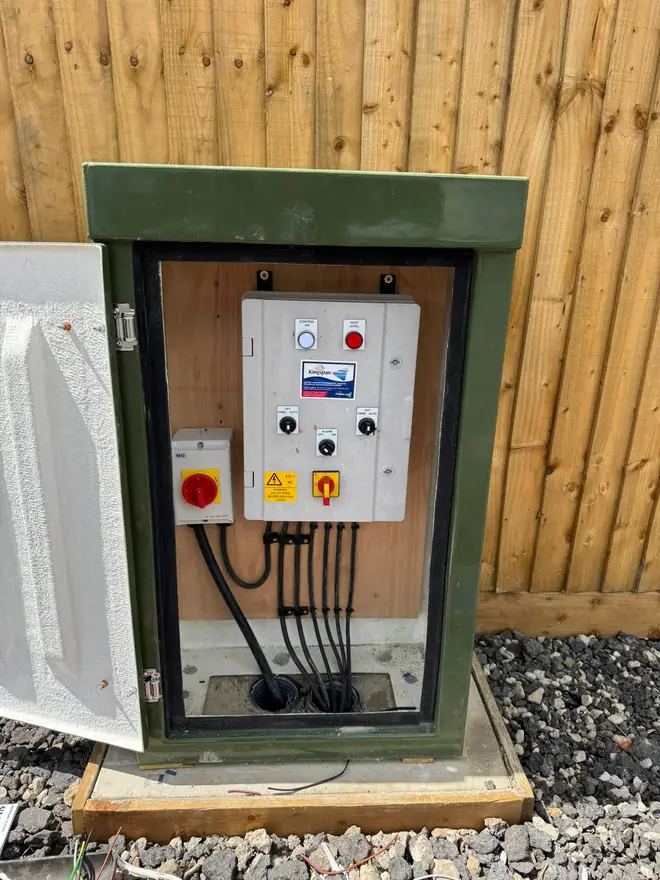
Open the kiosk (not the chamber) and look at the control panel. Tap the lights that are on below to see what they usually mean.
Tap the lights that are on
Panels vary. Yours may label lights differently, or show a message on a screen instead. Match them as closely as you can.
Step by step
What to do when your pump station alarm sounds
Cut your water use
No baths, showers, washing machine or dishwasher, and flush only when you have to. If the station serves other homes, let them know.
Silence the buzzer
Most panels have a mute or accept button. That stops the noise, not the problem, so the light usually stays on.
Note the panel lights
Which lights are on, and any message or fault code. Use the decoder above. A photo on your phone helps us bring the right parts.
Check the power
Look for a tripped breaker or RCD in your consumer unit. Reset it once. If it trips again, leave it off.
Keep away from the chamber
Don’t lift the cover or try to clear the pumps. Pump chambers can hold dangerous gases, and entering one needs confined space training.
Call us
Ring 03333 233577, 24 hours a day. If the chamber is close to overflowing, we can send a tanker to empty it while the fault is fixed.
Alarm types
Types of pump station alarm
Not every station has all of these, but most have at least a high-level alarm and a trip light for each pump.
High-level alarm
The one most people hear. A float or level sensor near the top of the chamber has detected that the sewage is higher than it should be. It tells you something is wrong, not what.
Pump trip or fault
A pump’s motor protection has switched it off, usually because it jammed, overheated or drew too much current. Often an amber or red light per pump.
Power failure
The panel has lost its supply. Alarms with a battery backup can still sound and flash when the mains is off; ones without simply go quiet.
Phase failure
On larger stations with a three-phase supply, a missing phase stops the pumps running safely, so the panel locks them out and raises an alarm.
Seal or leak alarm
Some pumps have a moisture sensor that warns when water is getting past the seals into the motor, before it causes a breakdown.
Remote alarms
Many stations send a text or call through a GSM unit, or report to a telemetry system, so someone knows even when nobody is near the kiosk.
What we find
Common causes of a pump station high-level alarm
These are the faults we find most often when we attend an alarm call-out.
Floats stuck in fat or rags
Fat builds a crust and wipes tangle the float cables, so the floats can’t tip and the pumps never get the signal to start.
Pump jammed by wipes and rags
Wipes, sanitary items and cloths wrap round the impeller until the pump stalls and trips.
Jammed one-way valve
Debris holds a non-return valve open, so sewage drains back into the chamber and the pump works in circles.
Blocked rising main
Fat and silt narrow the pressure pipe over the years until the pumps can’t push enough through.
Power or electrical fault
A tripped breaker or RCD, a failed contactor or relay, or a damaged cable.
Worn or failed pump
Pumps wear out. Bearings, seals and impellers all have a working life, especially on busy or neglected stations.
Rainwater or groundwater getting in
Cracked drains, loose covers and rainwater pipes wrongly connected to the foul drain overload the station in wet weather.
More use than it was built for
Extensions, extra bathrooms or more people than the station was designed for can push it past what it can handle.
Fat and wipes are behind more call-outs than anything else. Our guide to what not to flush with a pump station explains why.
A real call-out
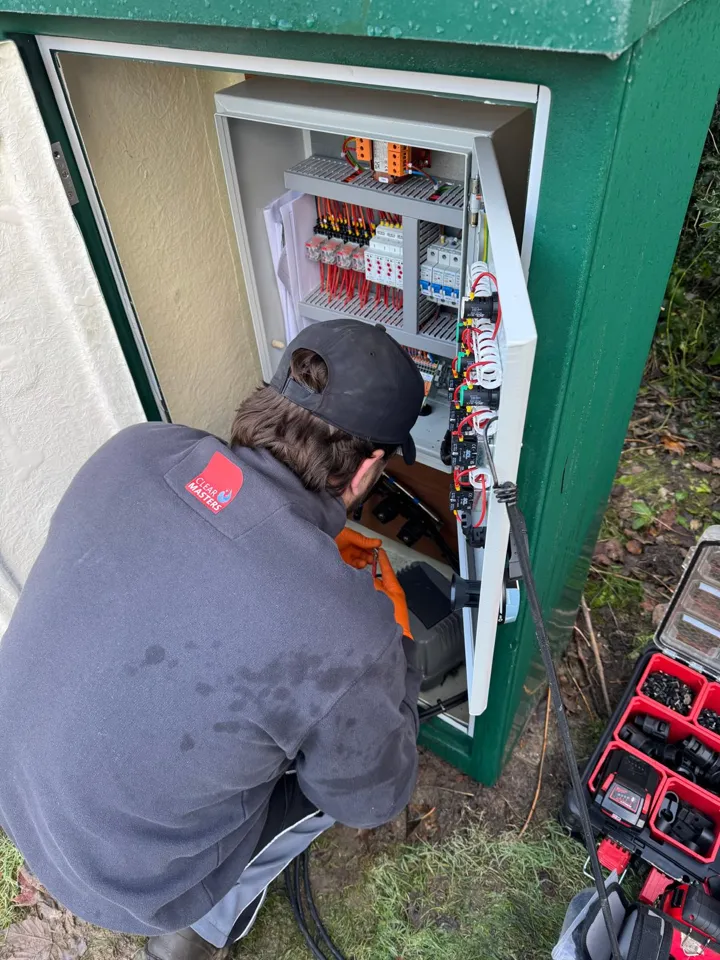
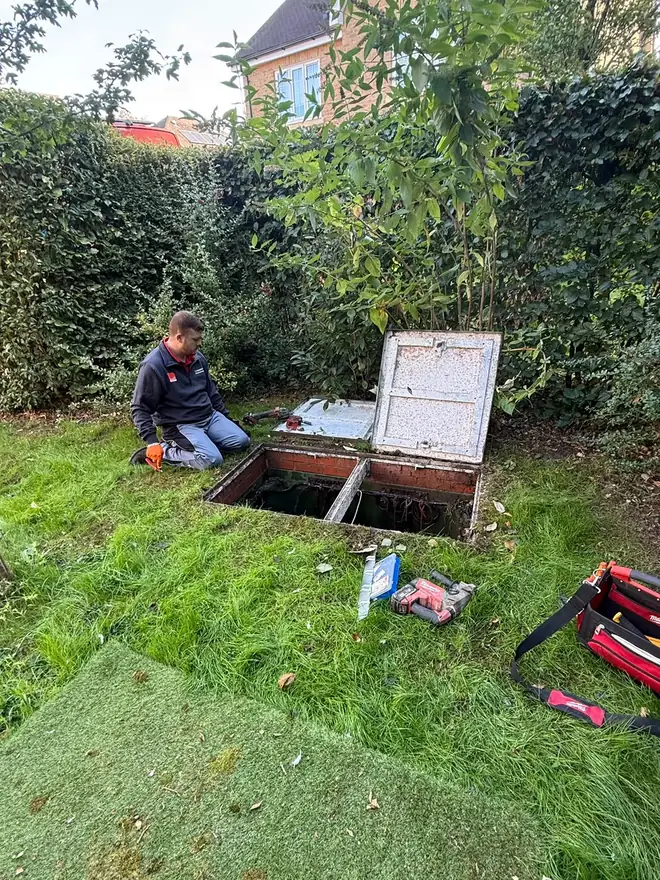
Alarm on, but the pumps were fine
We were called out to a pumping station after the customer reported that the alarm was sounding. They were braced for new pumps.
- FoundBoth pumps were working correctly. Floating solids, mainly fat and grease, had built up around the float switches and stopped them tipping, so the pumps were never told to start.
- FixedWe removed the fat and floating solids from around the floats so they could move freely again.
- TestedWe ran the station through its full operating sequence: the floats tipped correctly, the pumps started and stopped at the right levels, the high-level alarm worked, and the panel returned to normal.
- ResultBack in normal operation, with no replacement pumps needed.
Prevention
How to stop pump station alarms
Most alarm call-outs we attend could have been avoided with regular servicing. A service catches the fat around the floats, the rags on the impellers and the worn parts before they stop the station.
A good pump station service includes: testing every float and the alarm, running each pump in manual and automatic, checking the panel and electrics, checking the valves, guide rails and chains, and removing fat, silt and floating solids from the wet well, with a written record of anything that needs attention.
Between services, keep wipes, fat and sanitary items out of the drains, and look at the panel lights once a month. If you’re not sure your station has a battery-backed or remote alarm, ask us at the next service.
| Type of station | Service at least |
|---|---|
| Single home | At least once a year |
| Block of flats or several homes | Every 6 months |
| Commercial site, care home or school | Every 3 months |
| Any station: owner’s check | Once a month, look at the panel lights and listen for a normal run |
A guide based on common industry practice for pumping installations. Busy stations, or those that take a lot of fat, may need more.
Pump station servicing Wet well cleaningWho pays
Who’s responsible for a pump station?
Serving just your home
A pump station that serves only your property and sits within your boundary is yours to maintain and repair, along with its control panel and pipework.
Serving several homes
Most private stations that serve more than one property and pump into the public sewer were transferred to the water companies by October 2016. On newer estates, a management company may look after it until the water company adopts it. Our guide to who is responsible for drains explains more, and managing agents can see our planned maintenance for property managers.
Building or buying a home with a pump station? Building Regulations guidance says a new sewage pumping installation should be able to store around 24 hours of incoming flow, so that a pump or power failure doesn’t cause an immediate overflow. Older stations often hold much less, so it’s worth knowing what you have.
Questions answered
Pump station alarm FAQs
Why is my pump station alarm going off?
The alarm means the sewage in the chamber has risen above its normal level. The pumps may have failed or tripped, but it is just as often a float switch stuck in fat or rags, a blockage, a power problem, or more water arriving than the pumps can handle.
Does a pump station alarm mean the pump has failed?
Not necessarily. On a recent call-out of ours, both pumps were working perfectly: fat and grease had built up around the float switches, so the pumps were never told to start. The control panel lights usually narrow down the cause.
How long do I have before my pump station overflows?
It depends on the size of the chamber and how much water is going in. Building Regulations guidance says new installations should be able to hold a day’s flow, but older and smaller stations may hold far less. Cut your water use straight away and call us rather than waiting to find out.
Can I reset or silence the pump station alarm myself?
Most panels have a mute button, and silencing the buzzer is fine. Resetting faults again and again without finding the cause can hide a real problem or damage a pump. Never open the chamber: it can contain dangerous gases and needs confined space training to enter.
Can I use the toilet when the pump station alarm is on?
Keep water use to a minimum. Avoid baths, showers, the washing machine and the dishwasher, and flush only when you have to, until the station has been checked.
Can fat and wipes damage a sewage pump?
Yes. Wipes and rags wrap around the impellers and jam the pumps, and fat forms a crust that stops float switches moving. Both are among the most common causes of pump station alarms we attend.
How often should a pump station be serviced?
As a guide, a pump station serving a single home should be serviced at least once a year, a block of flats every six months and a commercial site every three months. Busy stations, or those that take a lot of fat, benefit from more frequent wet-well cleaning.
Who is responsible for repairing my pump station?
A pump station that serves only your home and sits within your boundary is yours. Most private pump stations serving more than one property and pumping into the public sewer were transferred to the water companies by October 2016. On newer estates, a management company may be responsible until the water company adopts the station.
Got a different question? Call 03333 233566 or send us a message.