 CLEARMASTERS
Pump Station Advice
Why Is My Pump Station Alarm Sounding?
A sounding pump station alarm usually indicates that the wastewater level within the chamber has risen higher than expected. Although this can be caused by a failed pump, electrical fault or blockage, the problem is not always with the pumps themselves.
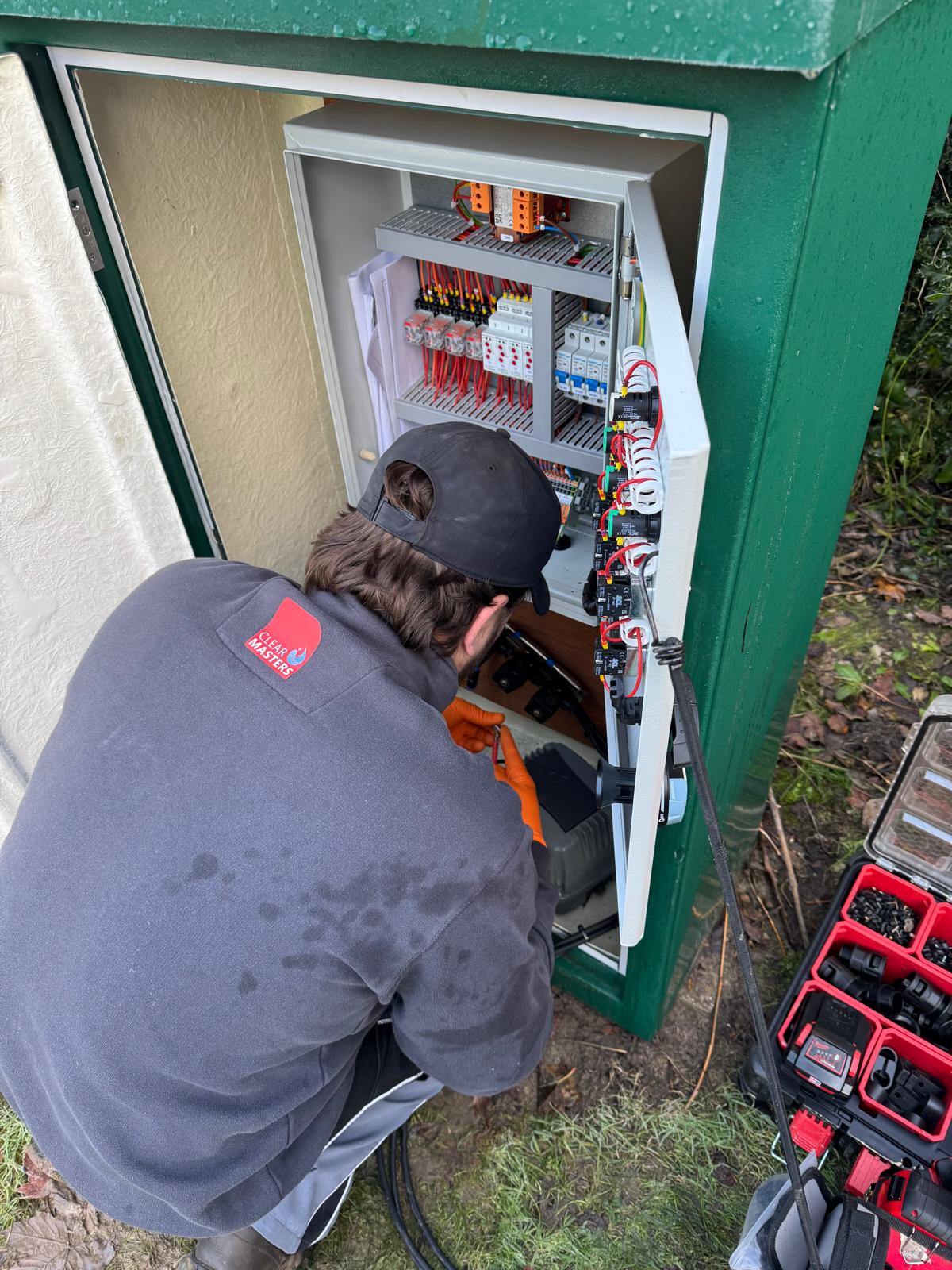
A recent pump station alarm call-out
Our engineers recently attended a pumping station after the customer reported that the alarm was sounding. On inspection, both pumps were working correctly, but floating solids — mainly fat and grease — had built up around the float switches, preventing them from tipping.
What Does a Pump Station Alarm Mean?
Most sewage pumping stations have a high-level alarm designed to warn that wastewater has risen above its normal operating level. When the level continues to rise, the station may overflow or cause sewage to back up into the connected drainage system.
Common causes include:
- A pump failing to start
- A control panel or electrical fault
- A blocked or damaged pump
- A blocked rising main or discharge pipe
- An obstructed float switch
- Unusually high incoming flows
- Fat, grease, wipes or floating debris
- A loss of electrical power to the pumps
What Do the Float Switches Do?
Float switches monitor the wastewater level within the pump station. As the level rises and falls, the floats change position and send signals to the control panel.
- Start and stop the pumps
- Trigger the high-level alarm
- Activate standby or assist pumps
- Control the pump changeover
If the floats are trapped or obstructed, they cannot send the correct signals and the station will not operate properly.
How Do Fat and Grease Affect a Pump Station?
Fat, oil and grease do not dissolve in wastewater. They collect at the surface and form a thick floating layer. Wipes and other unsuitable materials often become trapped in this layer.
How Was This Pump Station Fault Resolved?
The floating solids, fat and grease were removed from around the float switches so that the floats could move freely again. The station was then tested through its operating sequence.
- The floats tipped correctly
- The high-level alarm operated correctly
- The pumps started and stopped at the correct levels
- The control panel returned to normal operation
Once the obstruction was removed, the station returned to normal operation without requiring replacement pumps.
What Should I Do If My Pump Station Alarm Is Sounding?
Treat the alarm as an indication that the station requires attention. Reduce water use within the connected property where possible and arrange for the system to be inspected.
A competent engineer should check:
- The wastewater level within the chamber
- The pumps for blockages or mechanical faults
- Pump operation in manual and automatic modes
- The discharge pipework and rising main
- The movement and condition of the float switches
- The amount of fat, grease and floating debris
- The control panel and electrical supply
Can This Type of Pump Station Alarm Be Prevented?
Regular servicing and wet-well cleaning can substantially reduce the risk of floating solids interfering with the floats and pumps.
Routine maintenance should include:
- Testing floats correctly
- Checking pumps, rails, valves and pipework
- Checking pump operation
- Removing fat, grease, silt and floating solids
- Testing the high-level alarm
- Recording defects and recommended repairs
- Inspecting the control panel
Frequently Asked Questions
Does a pump station alarm mean the pump has failed?
Not necessarily. The alarm indicates that the wastewater level is higher than expected. This could be caused by a failed pump, but it may also result from a blockage, electrical fault, obstructed float switch or unusually high flow.
Can I reset the pump station alarm myself?
Resetting the alarm without identifying the cause may hide an active fault. Check that there is no immediate overflow risk and arrange for the station to be inspected.
Can fat and grease damage a sewage pump?
Yes. Fat and grease can restrict float movement, block pump impellers, obstruct pipework and place additional strain on the pumping equipment.
How often should a pump station be serviced?
The appropriate interval depends on the station's size, usage and operating conditions. Many sites benefit from at least one planned service each year, while higher-use systems may require more frequent visits.