When drains fail, the consequences can be serious—structural damage to your property, recurring blockages, and even environmental contamination. Traditional drain repairs often require excavation, meaning gardens, driveways, or even flooring may need to be dug up. This can be messy, disruptive, and extremely expensive.
Drain lining, also known as cured-in-place pipe (CIPP) lining, provides a modern and less invasive solution. Instead of digging, a resin-soaked liner is inserted into the damaged pipe and cured in place. The result is a strong, watertight new pipe formed inside the old one—restoring performance, preventing leaks, and strengthening the system from within.
In short, drain lining combines durability with convenience—delivering a long-lasting repair while sparing you the disruption of traditional excavation work.
Drain lining is an excellent option when your pipes are damaged but still structurally intact. It can be used to restore performance, stop leaks, and prevent future failures in a wide variety of situations. You should consider drain lining if you are experiencing:
Our process always starts with a detailed CCTV drain survey. This allows our engineers to assess the full condition of your system and determine whether drain lining is the most effective solution. If lining is not suitable—for example, in cases of a fully collapsed pipe—we will advise you on the best alternative, such as targeted excavation and replacement.
By choosing drain lining where appropriate, you can achieve a strong, watertight, and long-lasting repair while saving time, money, and disruption compared to traditional methods.
Not sure which repair is right for you? Here’s a quick side-by-side to help you decide:
Typical duration: Same day or within 24 hours
Typical cost: Lower than excavation
Best for: Cracks, joint failures, root ingress, recurring blockages.
Typical duration: 1–3 days depending on site conditions
Typical cost: Higher due to excavation & reinstatement
Best for: Major structural failure where lining cannot bridge gaps.
We always carry out a CCTV drain survey first. If the pipe is intact enough to support a liner, we recommend no-dig drain lining as the fastest, least disruptive, and most cost-effective fix. If the pipe is fully collapsed or missing sections, we will advise on targeted excavation with clear timelines & costs.
Our process ensures minimal disruption and a permanent repair:
We begin with a CCTV inspection to assess damage and confirm that lining is the right repair method.
High-pressure water jetting is used to clear blockages and debris, ensuring the pipe is ready for lining.
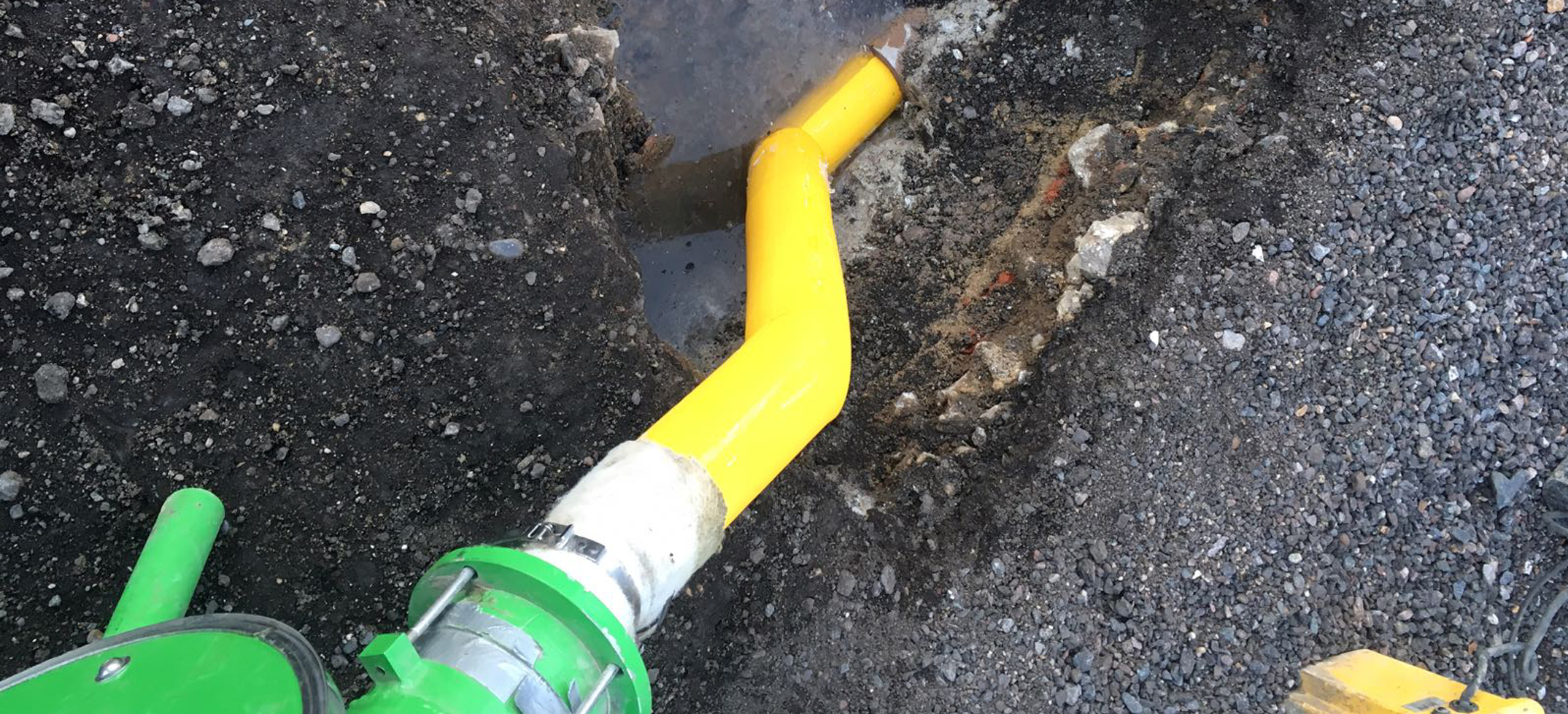
A resin-impregnated liner is inserted into the drain and positioned to cover the damaged area.
Once in place, the resin within the liner is left to cure naturally. As it hardens, it forms a tough, seamless new pipe inside the old one. This creates a watertight and durable finish without the need for excavation or additional heating processes.
A final CCTV inspection confirms the liner is perfectly installed and the pipe is fully restored.
Drain lining provides a permanent, cost-effective repair that avoids unnecessary excavation and keeps your property looking exactly as it did before the work began.
Trusted specialists with decades of experience
At Clearmasters, we specialise in no-dig drainage repairs that save you time, money, and disruption. Our drain lining service is carried out by experienced engineers using the latest techniques and high-quality materials to ensure a long-lasting result.
From residential homes to commercial sites, we provide tailored solutions that meet your needs and budget. With over 34 years in the industry, you can trust us to deliver reliable, efficient, and fully compliant repairs every time.
Drain lining is a no-dig repair method where a resin liner is installed inside a damaged drain, forming a new, watertight pipe within the old one.
It’s suitable for cracked, leaking, or weakened pipes but not for fully collapsed drains. A CCTV survey is always carried out first to check suitability.
Most lining jobs can be completed in a single day, depending on pipe length and condition. Larger or more complex systems may take longer.
Costs vary depending on the size and condition of the drain, but it’s generally far cheaper and less disruptive than excavation and pipe replacement.
High-quality liners are designed to last 50 years or more, giving you a permanent solution to drainage damage.
Yes, it can be used on clay, concrete, cast iron, and PVC pipes, making it suitable for most domestic and commercial drainage systems.
